
Microchip 93LC46C-E/SN 1K SPI Serial EEPROM: Features and Application Design Notes
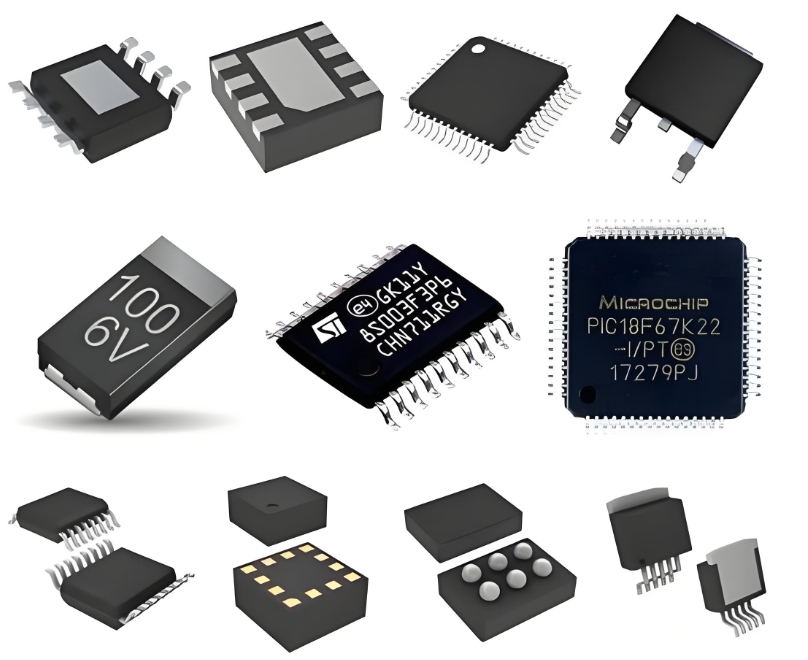
The Microchip 93LC46C-E/SN is a 1K-bit Microwire/SPI-compatible serial Electrically Erasable PROM (EEPROM) organized as 64 x 16 or 128 x 8 bits. Housed in a compact 8-lead SOIC package, this non-volatile memory device is engineered for reliability and ease of integration, making it a cornerstone component in a vast array of embedded systems.
Key Features and Specifications
The 93LC46C-E/SN stands out due to its robust feature set tailored for low-power and space-constrained applications. Its core characteristics include:
SPI and Microwire Serial Interface: Offers a simple, 3-wire serial interface (CS, SK, DI) for communication with a host microcontroller, minimizing pin count and board space.
Wide Voltage Operation: Supports a broad range from 2.5V to 5.5V, enabling operation across various logic levels and battery-powered applications where voltage can decay over time.
Low-Power Consumption: Features an extremely low standby current (1 µA, typical) and an active current of 1 mA during read/write operations, which is critical for power-sensitive designs.
High Reliability: Boasts an endurance of 1,000,000 erase/write cycles and data retention of over 200 years, ensuring data integrity for the lifetime of the product.
Built-in Write Protection: The device includes software and hardware write protection mechanisms. The `ORG` pin allows the user to select the memory organization (x8 or x16). The `ENABLE` and `DISABLE` instructions, along with the `WREN` (Write Enable) and `WRDI` (Write Disable) commands, prevent inadvertent writes to the memory array.
Application Design Notes
Successfully integrating the 93LC46C-E/SN into a design requires attention to several critical areas:
1. Interface and Pull-up Resistors: The Microwire/SPI bus is relatively robust, but for noisy environments, ensuring clean signal integrity is paramount. It is often good practice to use pull-up resistors on the CS (Chip Select) and DI (Data In) lines to guarantee a known state during power-up or when the microcontroller pins are in a high-impedance state.
2. Power Supply Decoupling: A 0.1 µF ceramic decoupling capacitor must be placed as close as possible to the `VCC` and `VSS` (GND) pins of the EEPROM. This capacitor shunts high-frequency noise on the power supply to ground, preventing erratic operation and potential write errors during programming cycles.
3. Write Cycle Timing: The internal write cycle time (`t_{WC}`) is typically 4 ms. After issuing a `WRITE` instruction, the host controller must wait for this duration before sending the next command. The device can be polled for completion by sending a `READ` instruction and checking the "Ready/Busy" status via the `DO` (Data Out) pin, which prevents the system from waiting a fixed, worst-case delay.
4. PCB Layout Considerations: Keep the trace lengths between the microcontroller and the EEPROM short to minimize capacitive loading and cross-talk. Avoid running high-speed digital or switching signals parallel to the SPI lines to prevent noise injection.
5. Code Implementation: Firmware should be structured to handle communication errors gracefully. Always follow the correct command sequence: enable writes (`WREN`), then issue the write command (`WRITE`), and finally disable writes (`WRDI`) if long-term software protection is desired. This sequence ensures data is not accidentally overwritten.
ICGOOODFIND
The Microchip 93LC46C-E/SN is an exceptionally versatile and reliable serial EEPROM solution. Its combination of a simple interface, wide voltage range, ultra-low power consumption, and robust data integrity makes it an ideal choice for storing calibration data, configuration settings, and security codes in applications ranging from industrial controls and automotive electronics to smart meters and consumer appliances. Careful attention to power decoupling, signal integrity, and firmware timing is the key to unlocking its full potential in any embedded design.
Keywords:
1. Serial EEPROM
2. SPI Interface
3. Non-volatile Memory
4. Low-Power Design
5. Data Retention

